Dakubetede Wilderness
Photo:© Chant Thomas
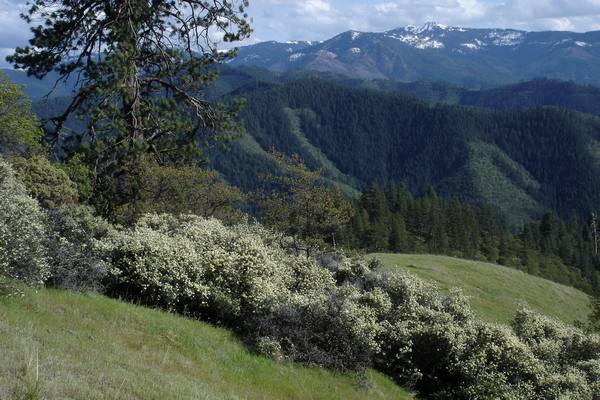
Dakubetede Wilderness view south from high on Inspiration Ridge looking across
the Little Applegate River Canyon to Dutchman Peak (7418') and the Siskiyou Crest.
The proposed Dakubetede Wilderness in the Little Applegate River CanyonThe Little Applegate River Canyon, hidden behind the Siskiyou’s “Front Range”, provides a
beautiful wilderness gem close to Ashland, Medford and Jacksonville. A scenic unpaved road
follows the rugged river canyon for several miles as it twists around numerous side ridges and
provides access to 3 trailheads for the popular trail system centered along the historic Sterling
Mine Ditch. See Figure 1.
Photo:© Chant Thomas
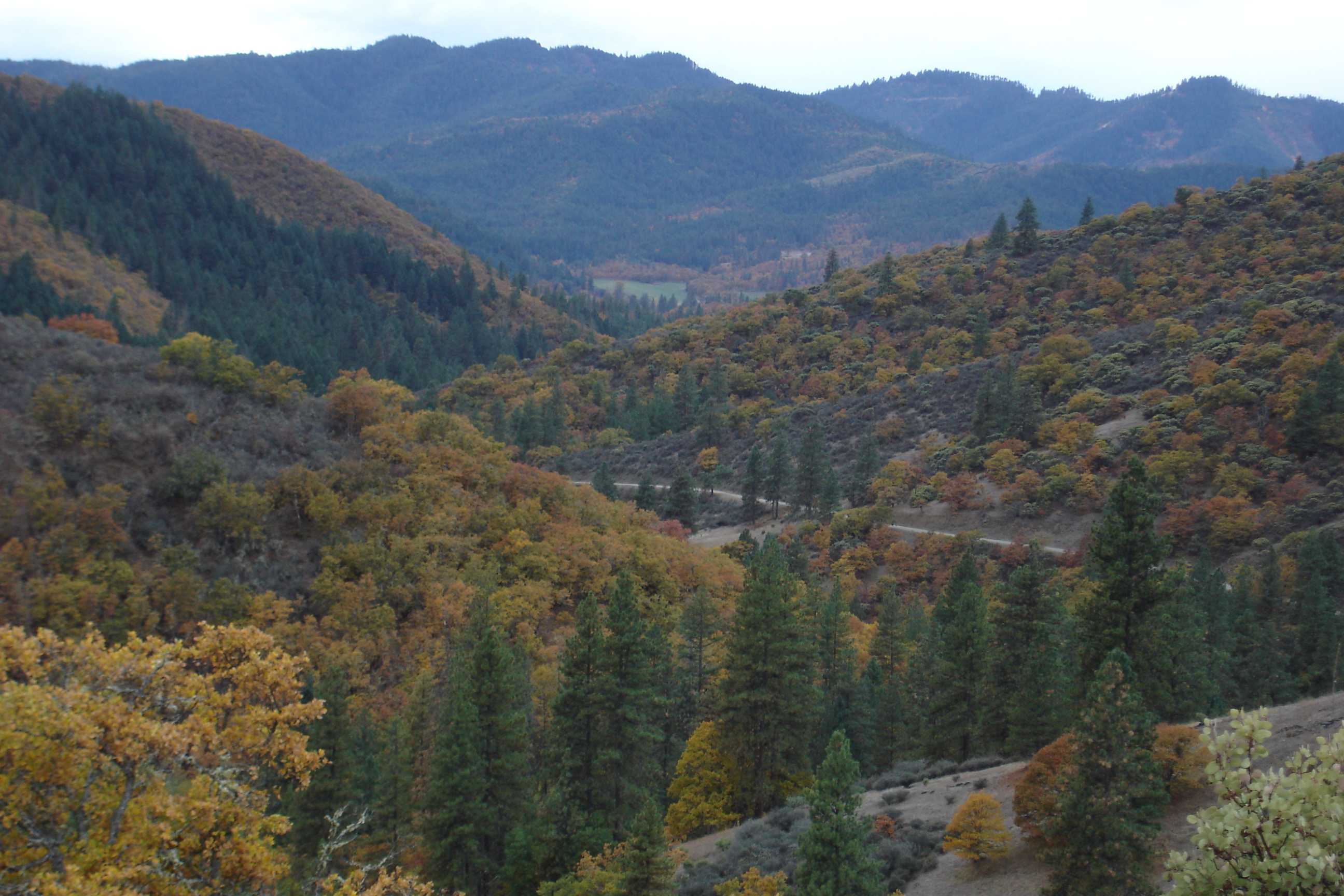
Figure 1. Scenic unpaved Little Applegate Road winds up the river canyon between the ridges
of the Dakubetede (on right) and Trillium Mountain (on left) wildlands in the proposed Dakubetede Wilderness.Located in the Little Applegate River Canyon of the eastern Siskiyous, the 10,650 acre
proposed Dakubetede Wilderness remains a wild island surrounded by a landscape heavily
developed during recent decades for timber management. Biodiversity remains intact here in three
distinct units: the Dakubetede Wildland Unit (6800 acres north of the river road), Trillium
Mountain Wildland Unit (1550 acres), and Quartz-Lick Wildland Unit (2300 acres), all separated
by a narrow dirt road and a few private in-holdings along the Little Applegate River.
Many adjacent landowners are willing to manage portions of their lands as wilderness
conservation. The Dakubetede Wilderness was first proposed to B.L.M. in 1980, and has enjoyed
local and regional support since then. The proposed Wilderness is named "Dakubetede" after the
Dakubetede People who dwelled for centuries in 3 villages along the Little Applegate River until
they were victims of "ethnic cleansing" at the hands of European Americans in the 1850s.
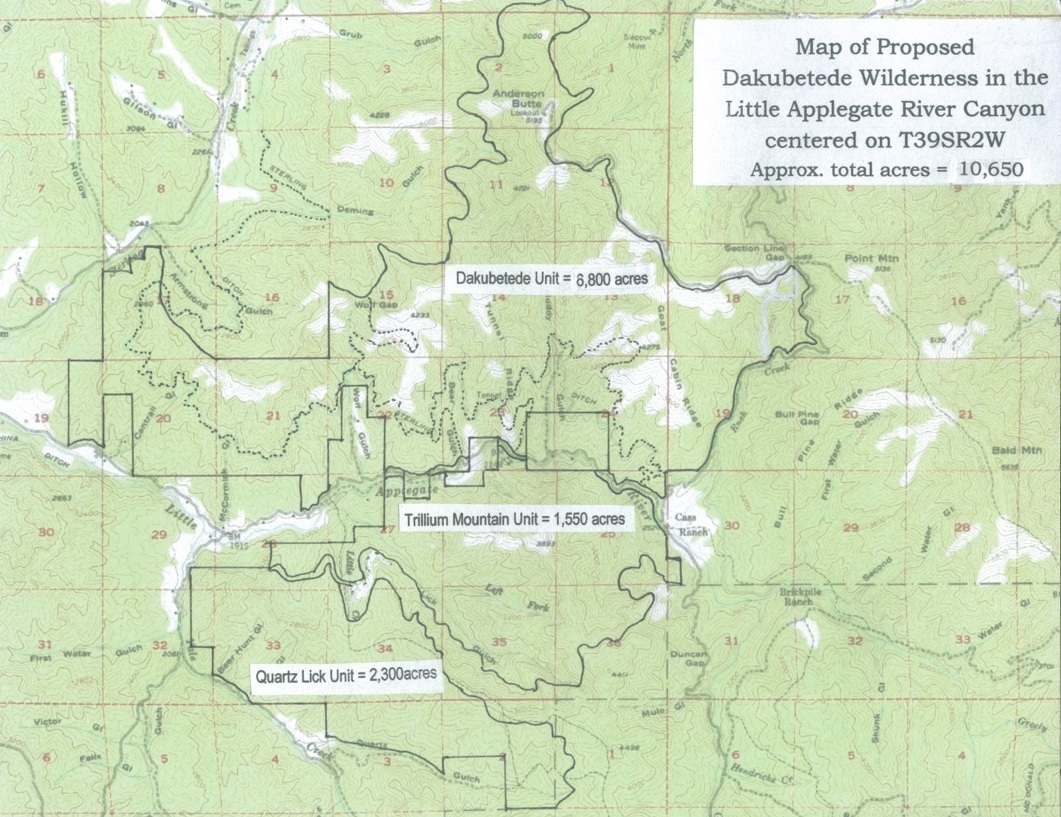
See Figure 2. Dakubetede Wilderness Proposal Map.
Figure 2. Topographical Map showing the 3 units of the proposed Dakubetede Wilderness.
Dotted line in Dakubetede Unit is the Sterling Mine Ditch Trail system.
Dotted lines in Quartz Lick Unit are some of the old trails needing restoration.The Little Applegate River in this area serves as an important spawning ground for steelhead,
and is one of the only river stretches managed by the Medford B.L.M. District’s Ashland Resource
Area. Cold water provided by lengthy stretches of closed canopy riparian forest in the river canyon
helps to keep water temperatures low and quality high for downstream habitat.Only about 5% of the Dakubetede Wilderness proposal is mature conifer forest; most acreage
consists of dry grasslands, deciduous woodlands, and diverse shrublands. This relative lack of
commercial timber and the area’s rugged terrain are reasons why the Dakubetede was passed over
and has remained wild while other areas nearby have been intensively developed with road
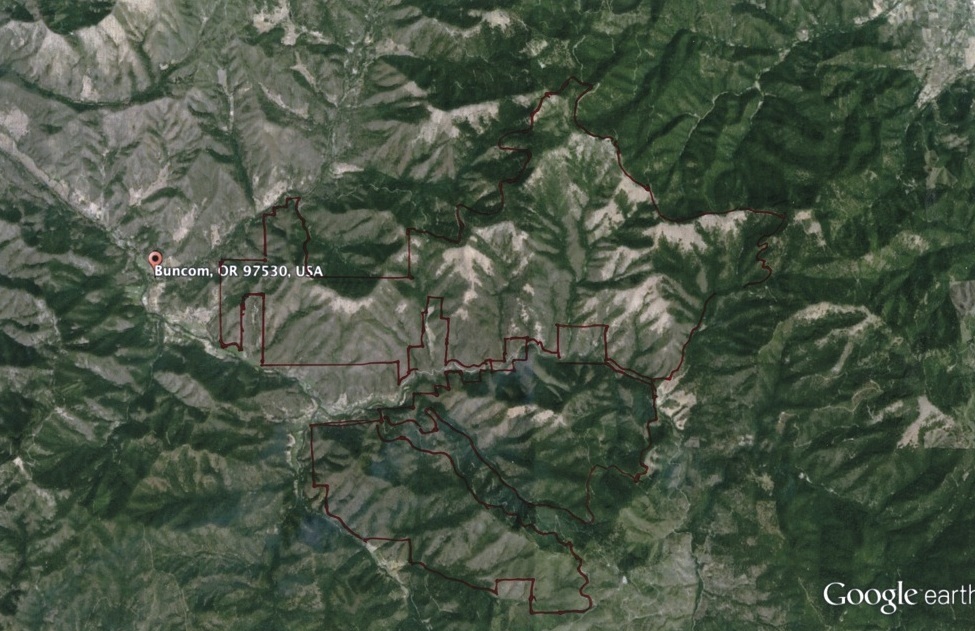
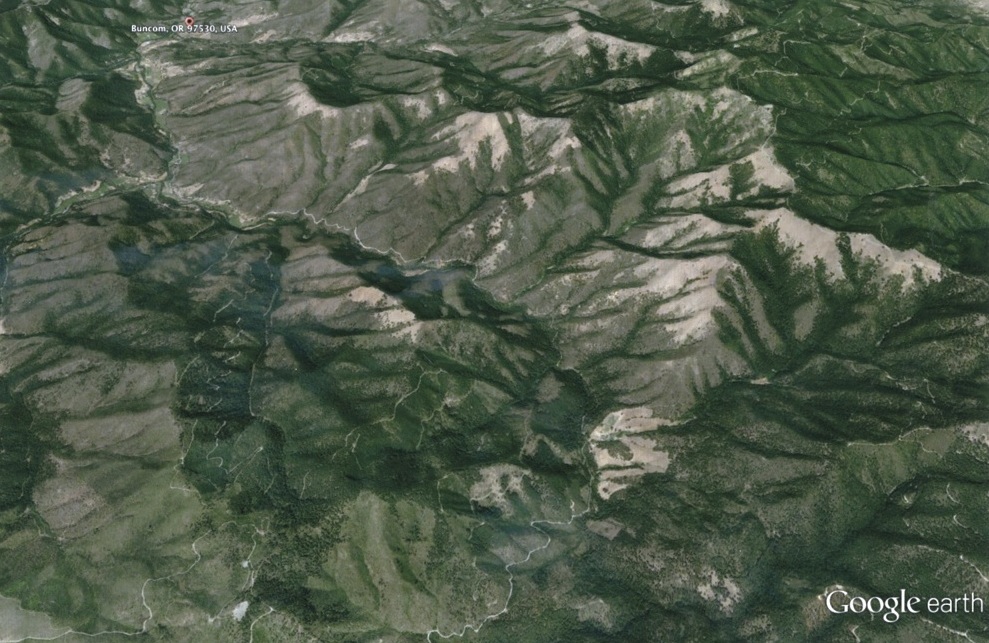
networks and timber cuts. See Figures 3 and 4. Aerial photos of Dakubetede Wilderness.Note in the following aerial photographs that the proposed Dakubetede Wilderness contains very little
forestland, much of which occurs on north slopes immediately above the river in the canyon. Most of
the forestland in the area lies outside of the proposal, to the north and east. Much of the arid land
north of Buncom burned in the Squires Fire of 2002.
Figure 3. Aerial photograph map of the proposed Dakubetede Wilderness.
Figure 4. Oblique aerial view looking northwest down the Little Applegate River Canyon.Tucked in the rain-shadow of the highest peaks of the Siskiyou Mountains, the Dakubetede
Wilderness has the most arid microclimate in western Oregon, resulting in a unique array of
diverse ecosystems and plant associations. This area contains excellent examples of rare lower
elevation and arid ecosystems that are in need of protected representatives for research and study.
The Dakubetede Wildland Unit contains plant associations not described elsewhere, the
westernmost stands of juniper in Oregon, and is the only known Oregon location of the endemic
Siskiyou Water Birch (Betula occidentalis inopina).The Dakubetede Wildland Unit is part of a 28,000 acre grazing allotment that has been
inactive for over 30 years, providing a unique opportunity to study the slow re-establishment of
native grass and forbe species after grazing-induced alien species have dominated some of the
grasslands. The western portion of this north unit burned in 1987, providing an opportunity to
study native and alien plant competition in early seral stages.The Dakubetede Wildland Unit is one of the few roadless areas in the Medford B.L.M. District
that is large enough and wild enough to warrant protection as a designated Wilderness on its own.
This north unit (approximately 6,800 acres) is known and loved by hikers as the location of the
historic Sterling Mine Ditch Trail, a B.L.M. designated Area of Critical Environmental Concern. At
over 20 miles, the most extensive trail system on the Medford B.L.M. District accesses and follows
the historic mining ditch, a popular recreation destination for hikers, hunters, runners, bicyclists,
and horseback riders. The Siskiyou Uplands Trails Association has obtained funding and organized
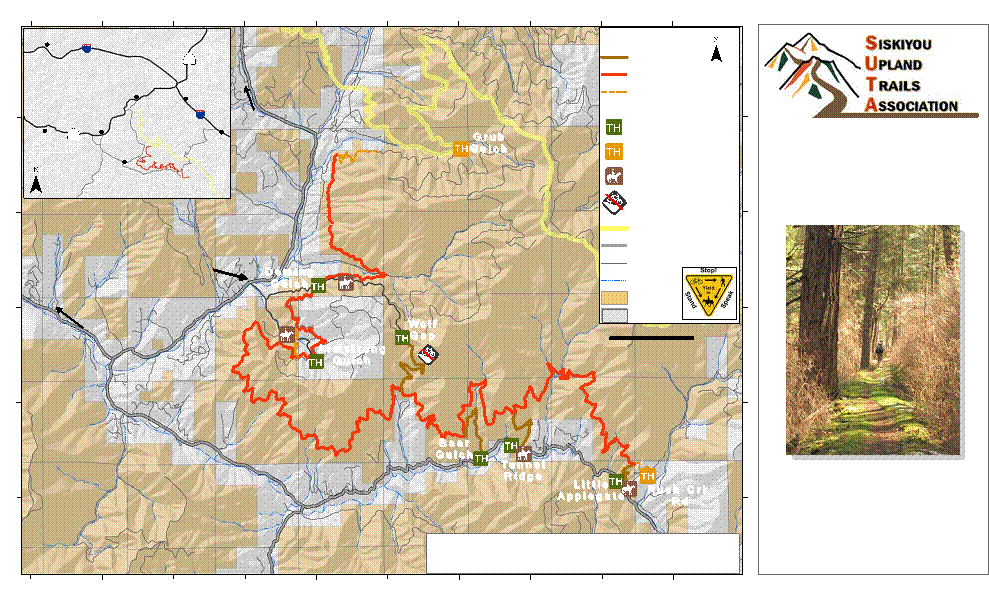
dozens of volunteers to rebuild and restore the trail system. See Figure 5. Trail brochure and map.
Figure 5. Siskiyou Uplands Trails Association brochure with map showing details of the historic Sterling Mine Ditch Trail System.
The area is renowned for its diverse botanical habitats and wildflower displays. The area
is renowned for its diverse botanical habitats and wildflower displays. School groups from
kindergarten through university students use the scenic trails to study natural history and
the human history as seen through the Sterling Ditch, a remnant of the local Gold Rush. The
Siskiyou Uplands Trails Association organizes an annual Run the Ditch Races event that draws
over 100 runners from across the west for 5 and 10 mile courses on the trails. Here’s the link:
Sterling Mine Ditch Trail "Run the Ditch" 5 and 10 mile races
It’s a
rare weekend when cars aren’t parked at the three trailheads along the Little
Applegate
River. (See Figure 6. Trailhead photo.) Even in the winter,
when the higher elevations are
snowbound
and the valleys filled with fog, hikers
come to catch glimpses of wildlife on the sunny
south-facing slopes.
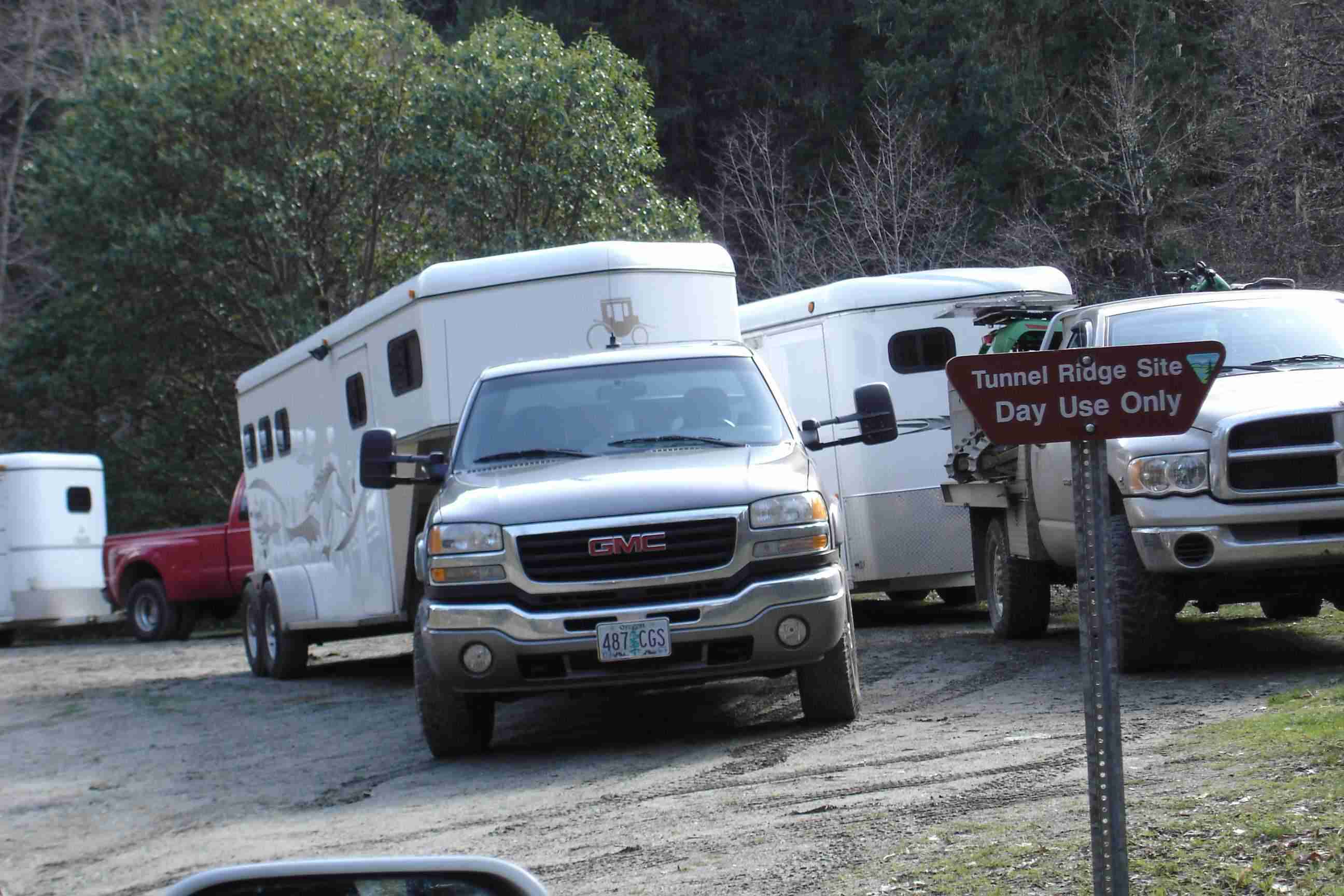
Photo:© Chant Thomas
Figure 6. Tunnel Ridge Trailhead and recreation site in the Little Applegate River Canyon
South of the Dakubetede Wildland Unit, the Trillium Mountain Wildland Unit, a rugged,
remote ridge, drops steeply into the inner canyon to include stretches of the Little Applegate River.
The river was classified as an “Eligible Wild and Scenic River” on maps for the B.L.M. Western
Oregon Plan Revisions. These dramatic north slopes of uncut conifer forests, including old-growth
stands inter-fingering with unique white oak/mountain mahogany woodlands, form the primary
view-shed looking across the narrow canyon from the popular Sterling Mine Ditch Trail system.The Trillium Mountain Wildland Unit contains particularly rare native grass communities
associated with an unusually rich assemblage of shrub species. The mosaic of oak and mountain
mahogany woodlands and older conifer forests feature extensive populations of Isopyrum stipitatum,
an indicator of undisturbed ecosystems. The south slopes of the ridge are a complex mosaic of steep
grasslands and diverse shrub communities with oak/pine savanna dropping to the banks of Lick
Creek, deep in its canyon. Forest botanist Richard Brock, a respected local expert on grass and
shrub communities, has described these grasslands as one of the most intact native grasslands he
has seen in southwest Oregon. Brock says these grasslands are important refugia for Idaho Fescue
and other native species, and are deserving of protection as a Research Natural Area. The Trillium
Mountain Wildland Unit has no trails; its spectacular crest meadows are reached only by cross
country hiking uphill.The Trillium Mountain and Dakubetede Wildland Units also provide refugia for crucial
populations of Fritillaria gentneri, a beautiful red lily, extremely rare and endemic to a few
populations in southwestern Oregon. Other rare plants found in the area include: Cimicfuga elata,
Camissonia graciliflora, Mimulus douglasii, Rafinesquia californica, Lithophragma heterophyllum,
Ribes inerme klamathense, and Sedum oblanceolatum, an Applegate endemic.The Quartz Lick Wildland Unit, a rugged ridge south and west of Trillium Mountain, also
contributes important scenic resources to the view-shed of the Sterling Mine Ditch Trail system
with older conifer forest stands on its north slopes. From the river canyon the ridge rises between
Lick and Yale creeks. Much of the western slopes of the unit burned in 2001, providing excellent
opportunities for study of natural recovery from wildfire. Proposed B.L.M. salvage logging was
stopped here, providing a rare instance of natural post-fire establishment of early seral stages of
biological diversity and wildlife habitat. Several old trails traverse the Quartz Lick Wildland Unit,
some providing scenic vistas from the Siskiyou Crest down into the pastures of the narrow Little
Applegate valley. Once restored, these trails will compliment the Sterling Mine Ditch Trail system to
the north.The proposed Dakubetede Wilderness has been the location of several academic research
projects, including a Prescott College investigation of the Siskiyou Birch. Some years, students from
an Antioch University program volunteer to maintain the Sterling Ditch Trail system while
surveying the area for rare plants. Recently, a group from Oregon State University surveyed the
Maple Fork of Muddy Gulch to research riparian characteristics. The group had to search for this
unmanaged B.L.M. watershed to use for baseline studies.A historic former trout farm hosts a university field campus and educational retreat center on
an in-holding deep in the Little Applegate River Canyon. Students, interns and guests come from
around the world to study natural history, research ecology, and create art in a powerful wilderness
setting. Once home to a small sawmill, this property is an example of long-time local landowners
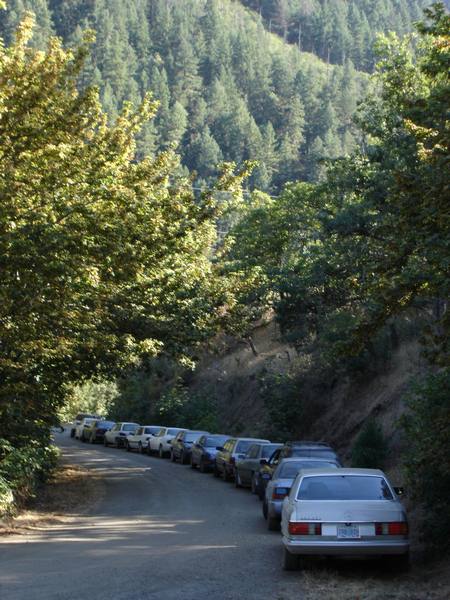
moving into the new economy based on the natural amenities of wilderness quality protected lands. See Figure 7. Overflow parking.
Photo:© Chant Thomas
Figure 7. Overflow parking for workshop at educational retreat center located in the
Little Applegate River Canyon. Forests on the ridge in the background
are across the river in the Trillium Mountain Wildland Unit.Beyond research and recreation, specific places in the Dakubetede Wilderness have been
used regularly as spiritual resources by people who prefer to worship surrounded by the powerful
work of creation rather than sitting in a church building built by men. Specific locations have been
repeatedly used as spiritual resources by local residents and by people from afar who attend
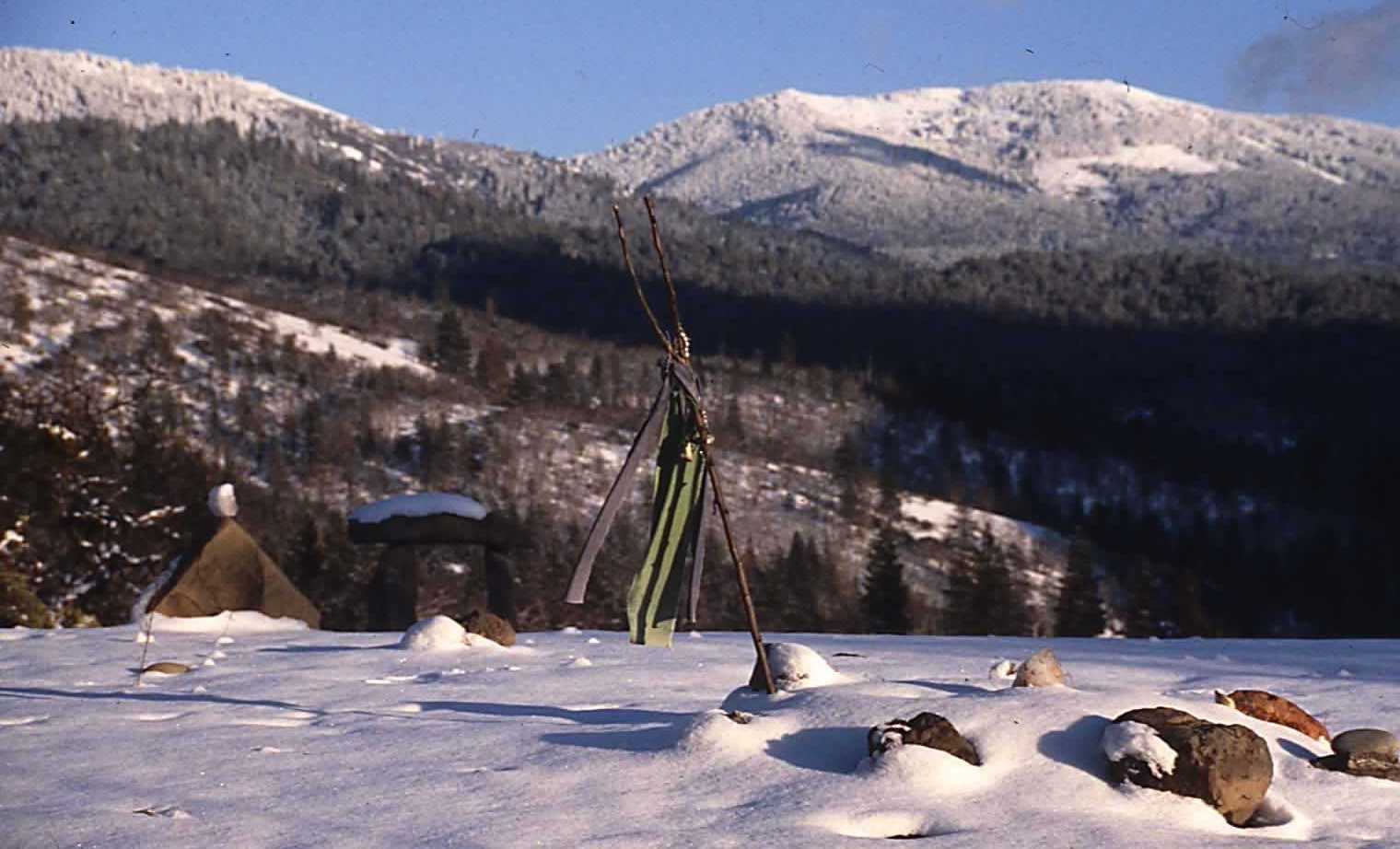
retreats that include visits to these spiritual “power spots”. See figure 8. Spiritual use site.
Photo:© Chant Thomas
Figure 8. Remote spiritual use site has been used by several hundred people over the last few decades.The proposed Dakubetede Wilderness, located just a few miles from the Siskiyou Crest, serves
as a vital lower elevation biodiversity link in the “land bridge” where the eastern Siskiyous
narrow before meeting the Cascade Range to the east.The proposed Dakubetede Wilderness deserves to be protected as a natural resource. All large
wild areas should be protected simply because such areas are so rare and are necessary as
refugia to conserve biodiversity, especially as we enter a period of accelerating climate change.
The vast majority of the public landscape has already been developed for commercial resource
extraction. These extensive developed public lands must be sufficient for providing those resources
not available to industry from private timberlands. If industry cannot thrive on such an expansive
landbase developed for commercial logging, the remaining wildlands must not be sacrificed in a
futile attempt to generate more corporate profits at the public’s expense.The Applegate River Watershed, where the proposed Dakubetede Wilderness is located, clearly
exhibits the evolution of the local economy from dependence on resource extraction to a vibrant
service-based economy. Over the last 40 years:· all 4 of the valley’s large sawmills closed down, yet a lively milling business continues on a
local level with smaller, sometimes portable, mills in many rural neighborhoods, utilizing
local logs for both local and regional use;· work in the forests became more focused on restoration than on traditional logging.
· many old unprofitable hay ranches became valuable vineyards, and wineries have sprouted
drawing tourists from Jacksonville and providing local employment;· other old ranches became niche ranches raising organic grass-fed beef; others became
organic farms, seed growers, and goat dairies;· national and international hang/para gliding events use the B.L.M. launch facility on
Woodrat Mountain above Ruch, and bring hundreds of participants and spectators from
around the world;· waves of retirees and people with location-independent income have moved to the Applegate,
attracted by its high quality natural amenities (scenic vistas, hiking trails, clean water, peace
and quiet), many of which are provided by B.L.M. lands adjacent to rural neighborhoods and
ranchlands;· these “amenity-driven in-migrants” have stimulated a diverse service economy including:
architects/builders/landscapers, medical and veterinary, attorneys/CPAs/tax consultants,
real estate/insurance/banking, domestic household/gardeners/animal care,
markets/stores/restaurants, and more.Research on hundreds of non-metropolitan counties in the west has shown that protected
areas such as (the Dakubetede) Wilderness Areas, National Parks and Monuments, Wild and
Scenic Rivers serve as economic engines in the rural west as economies based on resource
extraction evolve into service-based economies.(This paper) quantifies the relationship between the presence of protected federal lands (wilderness, national
parks, national monuments and roadless areas) and the growth of nearby populations and economies in the
Western United States. The results of this analysis show that the presence of protected federal lands is
correlated with relatively high rates of population, income, and employment growth in the rural West. (Lorah
and Southwick 2003). http://www.southwickassociates.com/wp-content/uploads/2011/10/Env-prot-pop-change-in-western-us-RLPAreas.pdfMore recent research quantifies increases in rural household income correlated to amount of
acres of protected lands in an average county: $436 higher per capita income for every 10,000
acres of protected lands, such as the proposed Dakubetede Wilderness.
Looking at the U.S. West’s non-metro counties, the statistical analysis described in this paper shows a
meaningful relationship between the amount of protected public land, higher per capita income levels in 2010,
and faster growth of per capita income and investment earnings between 1990 and 2010.
The effect of protected public lands on per capita income can be most easily interpreted in this way: on
average, western non-metro counties have a per capita income that is $436 higher for every 10,000 acres of protected public lands within their boundaries.
The effect of protected public lands on growth of per capita income and investment earnings in the
non-metro U.S. West can be similarly described. On average, from 1990 to 2010, income grew $237 faster
per person and investment income grew $175 faster per person for every 10,000 acres of protected public lands.
One reason for these positive relationships may be that in today’s economy, a premium is placed on the
ability of communities to attract talented workers, and the environmental and recreational amenities provided
by national parks and other protected lands serve to attract and retain talented people who earn above
average wages, and have above average wealth, such as investment income. (Headwaters Economics 2012).
http://headwaterseconomics.org/wphw/wpcontent/uploads/ProtectedPublicLands_Manuscript_2012.pdfNatural amenities derived from protected areas such as the proposed Dakubetede Wilderness
will be even more important in the future as population grows, more forestland is dedicated to
intensive timber production, and the climate continues to change. The O&C counties, like others in
the west, will be better off if they each have significant increases in protected land designations to
fuel the new service-based economies as resource extraction inevitably shrinks even further.…the counties most able to rebound from the loss of extractive industries are typically those that have
the environmental amenities needed to support growth in the service sector and to attract new residents who
bring income derived from dividends, interest, rent, and social security payments. (Lorah and Southwick, 2003).Protected public lands such as wilderness and national parks can be a significant boost to economic
growth in the non-metropolitan counties of the West. (Headwaters Economics, 2012)Too many wild areas that are important for research, recreation, clean water, educational
and spiritual uses, and future economic growth have been lost to industrial development over
the last few decades. These amenities of the Little Applegate River Canyon would be best
protected through designation as the Dakubetede Wilderness.
The Little Applegate Dakubetede Wilderness Roadless Areas
Take Action! Letter Writing Guide Join and Donate to TELAV!